GOAL: We have one goal, shared between two labs. We want to understand the biology of ageing to define novel tools and treatments to improve the symptoms of ageing and age-related diseases (such as Alzheimer's and cancer).

PROJECTS: Our research focuses on two main projects:

Project 1. Understanding the mechanisms of ageing to improve healthspan and lifespan.
1.1. Identifying novel tissue-specific markers of ageing that could be used in vitro and to measure biological ageing in vivo, especially in humans.
1.2. Studying the biological mechanisms that determine ageing and age-related diseases such as cancer and Alzheimer's.
1.3. Developing and characterizing novel drugs to improve ageing and age-related diseases, particularly Alzheimer's.
1.4.
Testing the effects of lifestyle interventions on age-related conditions.
1.5. Characterizing the molecular pathways involved in senescence and define specific markers.
1.6. Understand the effectors and regulators of the p53 pathway and its cell fate decisions.

Project 2. Defining imporved therapies for B cell malignancies.
2.1. Determining pathways of resistance and relapse in B cell malignancies, particularly DLBCL.
2.2. Defining novel combination therapies that could be tested in clinical trials.
2.3. Characterizing the role of senescence in B cell malignancies.

2.2. Studying the involvement of p53 in the progression of B cell malignancies.

TOOLS: We use a combination of in vitro and in vivo models, with a strong omics component, to define a translational approach to the study cancer and ageing, with the ambition to help improve human health with our discoveries. Our projects are the result of a collaboration between a multidisciplinary team of scientitsts located in different countries that include medics, biologists, biochemists, clinicians, bioinformaticians and chemists, among others, thus covering all the processes of translational research.

ACHIEVEMENTS: We were the first to describe the senescent surfaceome, the first to design an antibody-drug conjugate against senescent cells, the first to succesfully test a senoblocker as an anti-ageing drug in vivo and one of the first to use nanoparticles to target senescent cells. We have also contributed to define new treatments currently used in leukaemia. Check our most recent papers here.

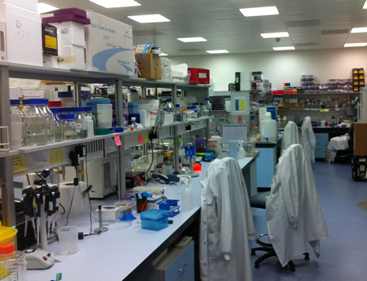
The Mechanisms of Cancer and Ageing Laboratory was established in 2008 at the University of Leicester (UK) with the aim of investigating the molecular processes that define cancer and ageing in order to propose novel therapies that could be clinically relevant in the near future. Our work focuses mainly on senescence, as well as the p53 pathway, which are key players in both cancer and ageing. The approach has always been to do translational research with a clinical impact starting with basic discoveries. The main disaeses of study of the lab are the B cell malignancies, as well as ageing changes in general. (Check the lab's page at the University).
In 2025, we opened the Biology of Neurodegeneration and Ageing Research Group, a second lab located at the BarcelonaBeta Brain Reserach Center (Spain), which focuses on translating our basic findings to the improvement of Alzheimer's, one of the most important age-related diseases and a key health problem which will be even more critical in the future. We want to help find better tools to diagnose and treat the disease using all the knowledge we have obtained since we started studying ageing. (Check the lab's page at the Center). We have a strong focus on women's health and nutrition.

If you are interested in joining us at any of the two locations, as a PhD student or a postdoctoral researcher, please contact us to discuss avialable options.